person-room · Genealogy
Herbastus de Crépon
Frosty
Inferred genotype: A/_ · B/_ · cchd/_ · D/_ · ej/ej
pedigree — Frosty phenotype (cchd/_ · ej/ej); offspring i133 (Harlequin) with i93 (Es/ej) requires ej/ej at E
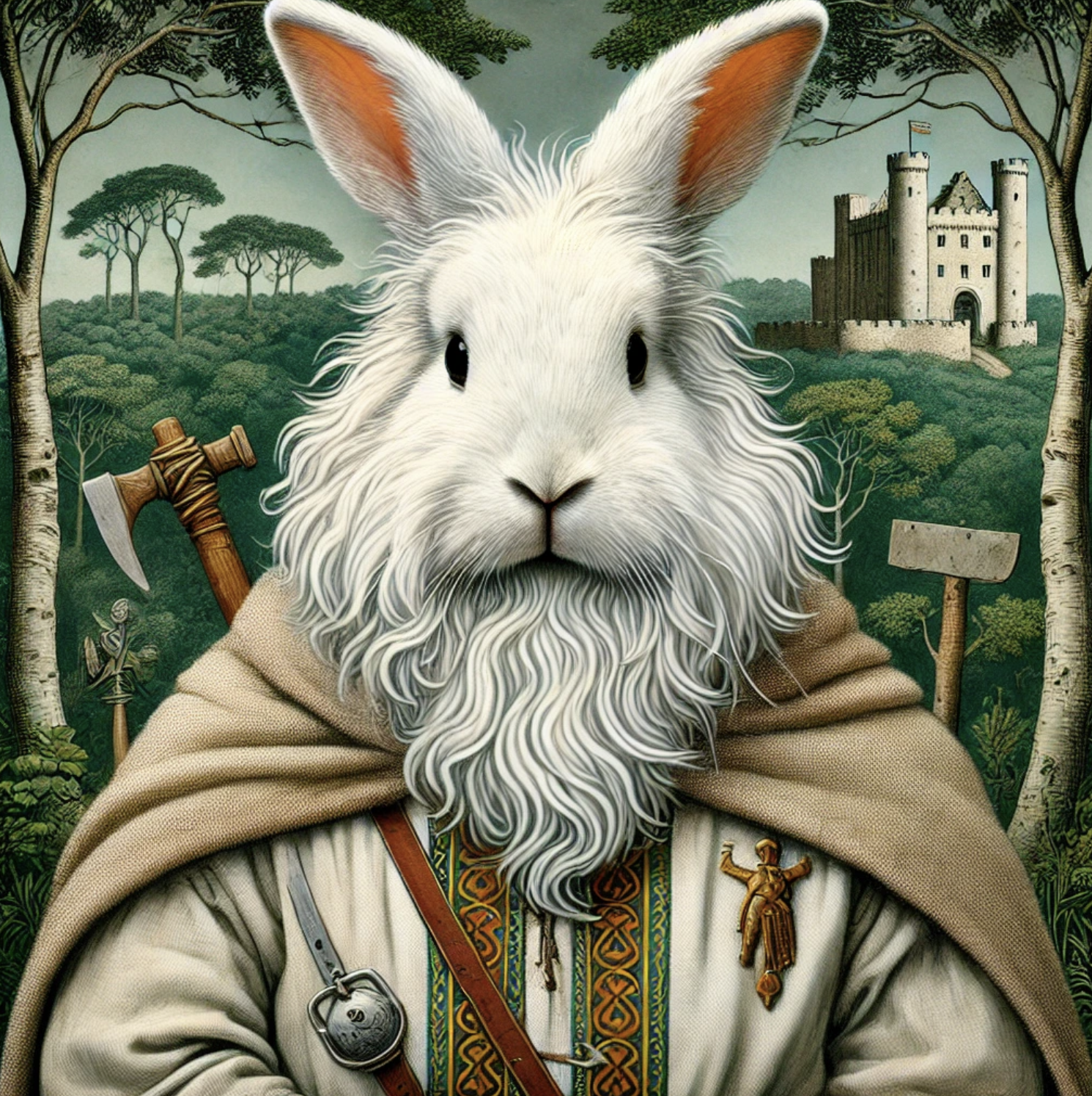
Namesake
Life for Herbastus de Crépon, as a prominent Norman noble and Forester of Arques, would have been defined by a mixture of responsibility, privilege, and strategic involvement in the rapidly shifting political landscape of early medieval Normandy. Here’s a detailed look at what life might have been like for someone in Herbastus’s position:
1. Position and Responsibilities:
As a forester, Herbastus would have held a significant role in managing the forests and lands in the region around Arques, an important area in Normandy. In medieval society, forests were vital resources for timber, hunting, and land management, and foresters were responsible for overseeing the use of these areas, ensuring they were not overexploited, and managing hunting rights for the nobility. This position also meant Herbastus would have had some judicial power, overseeing disputes and infractions related to the forests and hunting regulations.
Beyond his specific duties as a forester, Herbastus would have been an important landowner. His wealth and influence likely stemmed from the management of estates and the taxes or produce that came from them. As a noble, he would have had vassals and peasants working his lands, producing goods and providing military service when required.
2. Family Life and Social Status:
Herbastus was a nobleman, part of the upper echelon of Norman society. His daughters’ marriages to powerful Norman houses, such as the ducal family of Richard I of Normandy, suggest that Herbastus was well-connected and had the social standing necessary to negotiate prestigious matches for his children. This indicates he likely had close ties to the Norman ducal court.
His household would have been one of relative luxury compared to the average medieval family. As the head of a noble family, Herbastus would have lived in a manor or fortified home, surrounded by his immediate family, servants, and retainers. Life in such a household would have included a range of activities typical for a noble family: overseeing estate management, hunting, hosting local nobles, and attending court on occasion.
Herbastus likely arranged strategic marriages for his children, aiming to secure alliances and increase his family’s influence. Marrying his daughters into noble Norman families such as the Bolbec and Pont-Audemer houses, and possibly the Danish royal family, would have brought political and social benefits. His daughter Gunnor de Crépon, who became the Duchess of Normandy, significantly raised the family’s status.
3. Political Environment:
Normandy during the 10th century was a turbulent region. The duchy had been established by Viking settlers, and the descendants of these Viking lords were gradually integrating into the broader feudal system of Europe. Richard I of Normandy, Herbastus’s son-in-law, was working to consolidate his rule and defend Normandy against external threats like the French crown and internal rebellions. Normandy was becoming more powerful and influential, and families like the Crépons were central to this transformation.
Herbastus would have been involved in the local politics of Normandy, likely serving at the ducal court and participating in the governance of the region. His noble status meant he would have been called upon to support his overlords in military campaigns, attend court functions, and possibly even negotiate on behalf of his region.
4. Daily Life:
The daily life of a noble like Herbastus would have been centered around estate management, overseeing vassals and serfs, and ensuring that his lands produced enough to maintain his family’s lifestyle and obligations to the duke. The management of a large estate was no small task, involving agriculture, livestock, and sometimes overseeing local markets or mills.
Hunting would have been both a necessity and a pastime. As a forester, Herbastus would have had the right to hunt in the forests, which were valuable for their game (deer, boar, etc.). Nobles typically enjoyed hunting as a display of skill and status, and it was an important part of the noble lifestyle.
Feasting and hospitality were also central to noble life. Nobles were expected to host their peers, and these gatherings would be occasions for alliance-building, political discussions, and maintaining one’s social status. Herbastus’s household would have been a center of activity, with local nobles and knights frequently visiting.
5. Religious Life:
Religion was deeply woven into every aspect of medieval life. Herbastus, like other nobles, would have been a practicing Christian, likely supporting local churches or monasteries through patronage. His connection to the Church would have been important, not only for spiritual reasons but also for maintaining the family’s social standing.
Norman nobles often participated in religious rituals and supported the building of churches or monasteries. It’s likely that Herbastus contributed to such activities in the region, perhaps donating land or wealth to local religious institutions.
6. Legacy and Influence:
Herbastus’s legacy lies in his children, particularly through the marriage of his daughter Gunnor to Richard I of Normandy. His descendants became kings, queens, and nobles across Europe, particularly after the Norman Conquest of England in 1066. His other children also married into powerful Norman families, which ensured that the Crépon family would remain influential in Norman politics for generations.
Conclusion:
Life for Herbastus de Crépon would have been a blend of local governance, family management, and political maneuvering within the Norman nobility. His position as a forester of Arques placed him in charge of valuable resources, and his noble status meant that he had significant responsibilities to his liege lords. His strategic marriages ensured that his family would be remembered as one of the most powerful in Normandy, influencing not only Norman but also English history. While he may not have held the highest title, his role as the patriarch of the Crépon family helped shape the trajectory of medieval European politics.
Evidence
Inspect the historical record 1 claim on fileConnections
Analytical tools
View inheritance corridors Bird's eye view — founding corridors and continuity packets converging at this personChange projection
View through: Genealogy